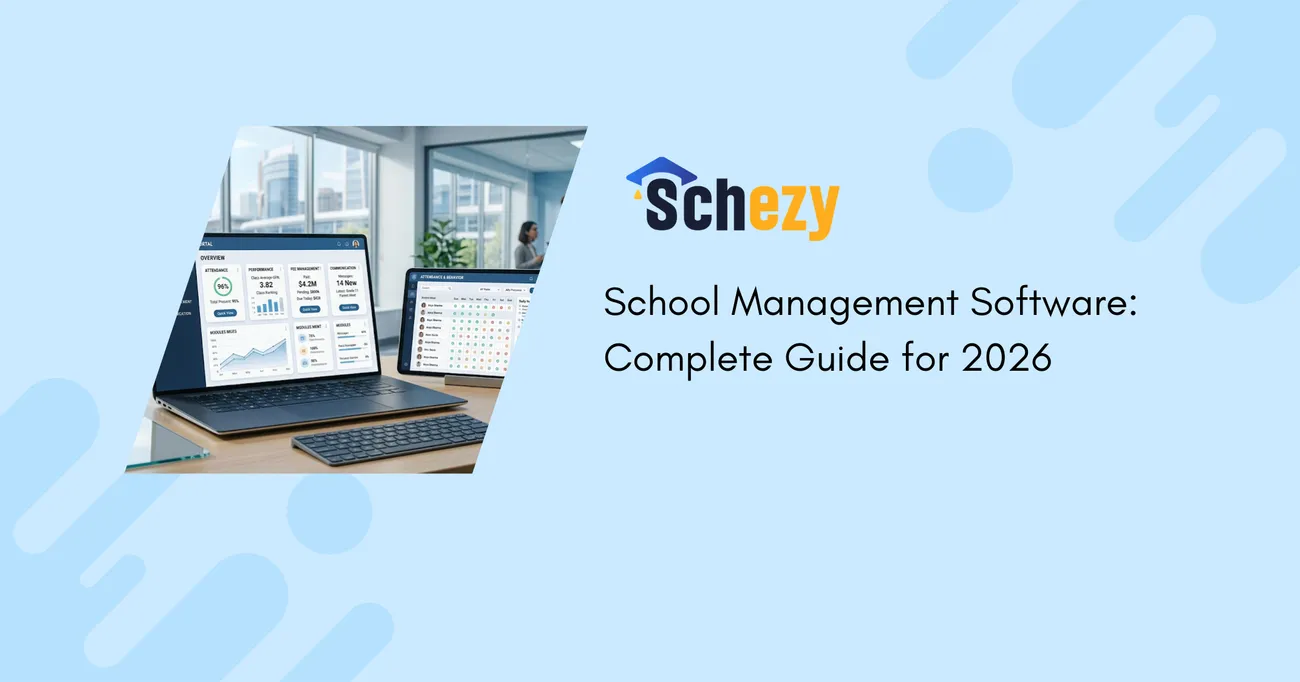
Digital Transformation in Education Through Smart School Management Systems
In today’s digital-first world, educational institutions need smarter ways to manage daily operations efficiently. From attendance tracking and fee collection to parent communication and academic management, schools handle multiple responsibilities every single day. Managing all these tasks manually can lead to delays, errors, and communication gaps.
This is where Schezy comes in.
Schezy is a powerful school management system designed to simplify administration, automate repetitive tasks, and improve collaboration between teachers, students, parents, and school management. It helps educational institutions streamline operations through one centralized platform.
Digital Transformation in Education Through Smart School Management Systems
Schools, colleges, coaching institutes, and educational trusts are under more pressure than ever to deliver better learning outcomes while running leaner operations. I've noticed this firsthand: principals juggling payroll, teachers spending evenings on attendance registers, and parents frustrated over delayed fee receipts or unclear progress reports. It's messy. But the right technology can change that.
In this post I'll walk through common problems schools face, what a modern School Management System should do, and how Schezy — an all-in-one School ERP Software — helps institutions transform administration, communication, and teaching. Expect practical tips, pitfalls to avoid, and real-world ideas you can use now.
Why digital transformation in schools isn't optional anymore
Education is no longer just about what happens inside the classroom. Today, it spans admissions, fees, transport, assessments, parent engagement, compliance and more. When these tasks are handled manually or with multiple disconnected tools, efficiency and quality suffer.
I've seen two common scenarios: one school uses Excel, WhatsApp groups and a handful of legacy systems; another has a unified School Administration Software that frees staff to focus on students. The difference is night and day. Time spent on administration is time not spent on pedagogy.
Adopting a Student Management System or an Online School Management Platform isn't a silver bullet. But it's the foundation for faster decision-making, better transparency, and measurable gains in learning outcomes.
Top pain points schools face today
- Administrative overload: Manual registers, paperwork, and repetitive data entry take up administrators' workdays.
- Fragmented systems: Different tools for attendance, fees, exams, and messaging create duplicate data and confusion.
- Poor parent-teacher communication: Updates get lost in chat groups, circulars aren't read, and parents feel disconnected.
- Fee management headaches: Missed payments, unclear receipts, and manual reconciliations cost time and money.
- Inconsistent attendance tracking: Roll calls, paper registers, and manual consolidation lead to errors and disputes.
- Slow report generation: Exam result processing and report cards take days or weeks instead of hours.
- Data security & compliance: Sensitive student records need secure storage, controlled access, and audit trails.
These are not theoretical issues. In my experience as a consultant working with schools, administrators tell me the same list over and over. The result is stressed staff and unhappy parents — not a great environment for learning.
What a modern School Management System must do
Not all systems are equal. When you're evaluating an Online School Management Platform or School Administration Software, look for practical capabilities that solve daily problems:
- Unified data model: One place for student, staff, fee, attendance and academic records. No duplication.
- Automated workflows: Fee reminders, late fee calculations, exam scheduling, and admission approvals should be automatic.
- Parent and student portals: Real-time dashboards for progress, attendance, fees and communications.
- Teacher tools: Easy lesson planning, online assignments, gradebooks, and report generation.
- Integration-friendly: Works with biometric devices, payment gateways, transportation GPS and LMSs.
- Mobile-first design: Staff, teachers, parents and students should get a good experience on phones.
- Security and compliance: Role-based access, encrypted data, and activity logs are essential.
- Analytics and reports: Actionable dashboards for attendance trends, fee defaulters, performance gaps, and resource utilization.
If your prospective School ERP Software doesn’t do these things, you're only getting half the benefit. You want a platform that reduces manual effort and gives actionable information to leaders.
Introducing Schezy — a single platform for school operations
Schezy is built to be that single platform. It's an integrated School Management System and School ERP Software designed for Indian and global educational organizations — schools, colleges, coaching centers and trusts.
What stands out for me about Schezy is how it balances depth with simplicity. It includes core modules for admission, attendance, fees, examinations, HR, transport and a parent app — yet remains easy for staff to pick up. No heavy training schedules. No expensive customizations to do basic things.
Here’s a quick snapshot of the most useful features you’ll care about:
- Central student database and class management
- Automated fee collection, receipts, concessions and reconciliations
- Daily attendance with mobile and biometric support
- Exam creation, grading, automated report cards and analytics
- Parent & student portal for view of grades, fee status and messages
- Transport management with GPS integration and route planning
- Payroll, staff attendance, and HR workflows for teachers and non-teaching staff
- Notifications, circulars, SMS and email integrations
- Secure cloud hosting with role-based access controls
One thing I appreciate: Schezy doesn't try to be everything at the same time. It focuses on the workflows that truly matter to administrators and teachers, then offers integrations for specialized tools like Learning Management Systems (LMS) if needed.
How Schezy solves everyday school problems
Let's map Schezy's capabilities to the pain points I mentioned earlier. This makes the benefits concrete.
1. Reducing administrative overload
Routine tasks like student registration, document verification and batch transfers can be automated. Schezy centralizes these workflows, so admissions staff don’t re-enter the same data in five different places. In practice, that reduces human error and frees up time — time that can be redirected to counseling students or improving curriculum.
2. Eliminating fragmented systems
With a unified Student Management System you stop the “data ping-pong.” One update propagates everywhere: a change to class assignment updates timetables, fee schedules and exam roll numbers. That single source of truth matters when you have hundreds or thousands of students.
3. Improving parent-teacher communication
Parents want timely, trustworthy information. Schezy’s parent app pushes attendance alerts, fee due reminders and academic progress updates straight to their phones. Schools today also rely on visual communication for announcements and campaigns, making tools like LinkedIn carousel maker useful for creating engaging academic updates, admission promotions, and awareness content. Trust me — parents notice and appreciate a system that makes communication professional.
4. Simplifying fee management
Automated invoicing, multiple payment gateways, and reconciliation tools reduce collection time and errors. Schezy can auto-send reminders for due dates and flag defaulters for follow-up. From an administrator’s perspective, that reduces cash flow problems and tracking headaches.
5. Making attendance accurate and auditable
Modern attendance modules support biometric devices, RFID and mobile check-ins. Schezy consolidates attendance data and creates daily summaries, late marks, and absentee lists automatically. This reduces disputes and helps principals identify attendance-related issues before they escalate.
6. Speeding up exams and reporting
Exam setup, answer-sheet marking, grade calculations and report card generation are accelerated. Schezy supports multiple assessment patterns and makes results available to parents and students quickly. Teachers spend less time crunching numbers and more time analyzing where students need help.
7. Securing data and complying with regulations
Student records are sensitive. Schezy provides role-based access controls and secure hosting to protect data. You can also maintain audit trails for actions like fee adjustments or result edits — useful during audits or regulatory checks.
Real operational benefits and KPIs to track
When schools move from manual processes to a system like Schezy, certain KPIs usually improve. Here are indicators you can use to measure success:
- Administrative time saved: Hours saved per staff member per week.
- Fee collection rate: Percentage of on-time fee payments.
- Attendance accuracy: Reduction in manual corrections and disputes.
- Parent engagement: Active parent app logins and message read rates.
- Exam processing time: From exam day to published report card in days/hours.
- Cost per student for administrative tasks: Change in total admin cost divided by student count.
In my experience, modest system changes can cut administrative workload by 20–40% in the first year. That’s real time for teachers and leaders to focus on pedagogy and strategy.
Common mistakes schools make when implementing a School ERP Software
Implementations often fail not because the software is bad, but because the process is flawed. Here are pitfalls I've repeatedly seen — and how to avoid them.
- Skipping stakeholder buy-in: Don’t make the system an edict from the office. Involve teachers, office staff, transport managers, and parents early. Their input prevents resistance later.
- Over-customization: Requesting excessive custom features increases cost and delivery time. Choose a flexible platform that covers most needs and use integrations for special cases.
- Poor data migration: Bad or incomplete data carried over from legacy systems creates chaos. Plan a phased migration, validate records, and keep backups.
- Underestimating training: A good interface helps, but people still need practice. Deliver role-based training and quick reference guides.
- Neglecting mobile experience: Many parents and teachers primarily use phones. If the mobile app is weak, adoption will suffer.
- Ignoring change management: Implementations require clear policies and champions. Identify power users in each department to lead adoption.
Address these issues upfront. It adds a small amount of effort during rollout but saves significant time and frustration later on.
Implementation checklist — practical steps for a smooth rollout
Here’s a pragmatic checklist to guide an effective deployment of a School Management System like Schezy:
- Form a project team: include principal, admin head, senior teacher, accountant and IT person.
- Map existing workflows: admissions, fee receipts, attendance, exams, transport routes.
- Identify pain points and must-have features. Keep a short list of "nice-to-have" items.
- Plan phased implementation: core modules first (admissions, fees, attendance), then add exams, HR and transport.
- Clean the data: standardize student names, IDs, fee codes and class structures before import.
- Set up integrations: payment gateway, biometric devices, SMS gateway, and any LMS you use.
- Train users by role: short sessions, followed by hands-on practice and a “help window.”
- Run parallel systems for a short period if needed, then switch once stable.
- Collect feedback and iterate: make small adjustments rather than big rewrites.
- Measure outcomes: track the KPIs listed earlier and report to stakeholders.
Following this roadmap keeps the transition steady and manageable. In my work with schools, the phased approach tends to preserve morale and encourage adoption.
How to select the right School Management System
There are many products in the market. To choose effectively, keep decisions tied to your school’s priorities, budget and IT maturity. Here are evaluation criteria I recommend:
- Core functionality: Does it cover admissions, fees, attendance, exams and parent communication?
- Ease of use: Can non-technical staff perform daily tasks without heavy support?
- Deployment model: Cloud-hosted or on-premises — which suits your connectivity and privacy needs?
- Scalability: Will the system handle expected growth? What about multiple branches?
- Integration capability: Does it connect to payment gateways, biometric devices, an LMS and accounting systems?
- Support and training: What SLA, onboarding help and documentation are provided?
- Data security: Does it offer encryption, role-based access and activity logs?
- Total cost of ownership: Consider subscription, implementation, training and maintenance costs.
Schezy fits well against these criteria for many schools. Its cloud-first approach reduces IT overhead and the built-in modules cover the typical workflows schools need out of the box.
Security, privacy and compliance
Handling student data comes with responsibilities. Parents and regulators expect schools to protect personal information. A few practical steps to keep data secure:
- Choose a platform with encrypted storage and TLS/HTTPS for data in transit.
- Implement role-based access: teachers see class-level data, admins have broader access, and finance teams access fees.
- Maintain audit logs for critical actions like fee adjustments, grade changes, or record edits.
- Back up data regularly and test restore procedures.
- Train staff on basic security hygiene: strong passwords, device protection and phishing awareness.
Schezy provides several of these safeguards by default and can be configured to meet local data protection rules and institutional policies. If you're part of an educational trust or a group of schools, centralized administration with controlled access becomes especially useful.
Cost-benefit: what to expect financially
One question I get a lot is: "Will this pay for itself?" The answer: usually yes, but expectations matter.
Immediate savings often come from reduced paper usage, fewer staff hours spent on reconciliation, and faster fee collection. Over time, better parent engagement and improved student outcomes can increase enrolment and retention.
Think in terms of:
- Short-term savings: Less manual work, fewer errors, and faster payments.
- Medium-term benefits: Improved parent satisfaction, streamlined HR, simpler audits.
- Long-term ROI: Better analytics to drive academic improvements and resource allocation.
Measure ROI with a simple baseline: calculate current admin costs, time spent on recurring tasks, and fee collection performance. After six months on a good School ERP Software, you should see measurable improvements in those areas.
Case examples — what transformation looks like
Here are a few anonymized, typical results from schools that implement a unified system like Schezy. These aren’t marketing claims; they’re what I’ve observed when systems are adopted thoughtfully.
- Urban CBSE school: Cut result processing time from 7 days to 24 hours by switching to automated exam grading and report generation.
- Small rural boarding school: Reduced fee reconciliation effort by 60% after adopting online payments and automated receipts.
- Multi-branch trust: Centralized student records and payroll, allowing faster policy rollout and consistent reporting across campuses.
- Coaching institute: Increased parent and student engagement through a mobile portal for test series results, boosting class retention.
Common thread? The schools that measure and iterate gain the most. Technology amplifies existing good practices and makes weak processes visible — which is actually a good thing.
Best practices for long-term success
After the initial implementation, sustaining benefits requires continuous attention. Here are simple, practical habits I've seen work:
- Schedule quarterly reviews to evaluate system use and identify feature gaps.
- Create "super users" in each department to mentor others and surface issues.
- Use analytics to drive decisions — e.g., focus remedial teaching on classes showing attendance dips and grade slippage.
- Keep communications centralized. Encourage parents to use the app instead of chat groups for official notices.
- Update workflows when new academic policies are introduced — a system only helps if the data model reflects reality.
These habits keep the platform aligned with your school’s evolving needs and maintain staff confidence in the tool.
Who benefits most from a School Management System?
Practically every stakeholder gains something:
- Principals and managers: Real-time dashboards and reports for quick decisions.
- Administrators: Less repetitive work and clearer processes.
- Teachers: Faster grading, better tracking of student progress, and less paperwork.
- Parents: Transparent fee records, timely updates and easy access to student performance.
- Students: Clear timelines, accessible learning material (when integrated with LMS), and faster feedback.
Coaching institutes and educational trusts also benefit from standardized processes across branches and consolidated financial reporting.
FAQs and quick clarifications
Below are a few quick answers to common questions I hear:
- Do schools need to replace their LMS? Not necessarily. Many School ERPs integrate with LMS platforms. Schezy focuses on the administrative and operational workflows, and you can connect it to your chosen LMS if needed.
- Can we use Schezy with biometric devices? Yes. Schezy supports biometric and RFID devices for reliable attendance tracking.
- What about offline access? Some modules, like attendance via the mobile app, can work with intermittent connectivity and sync when online. Confirm specifics with the vendor for your use case.
- How long does rollout take? For a medium-sized school, expect core modules to be live in 4–8 weeks with a phased approach. Large, multi-branch deployments will take longer.
Common pitfalls and how to avoid them (short checklist)
- Don't treat tech as the whole solution: pair it with process improvements.
- Avoid one-person dependency: spread knowledge across the team.
- Don't skip data validation: bad imports create long-term headaches.
- Plan for maintenance: budget for annual subscriptions and periodic training.
Final thoughts — make transformation practical
Digital transformation in education doesn't require the fanciest software or a massive budget. What matters is choosing a School Administration Software that fits your workflows and gets used. In my experience, the schools that succeed are the ones that start small, measure impact, and iterate.
Schezy is one such platform — it covers the critical workflows schools need and helps institutions move from reactive to proactive operations. If you're a principal, owner, administrator, or teacher evaluating systems, focus on adoption, training and measurable outcomes rather than shiny features alone.
Helpful Links & Next Steps
If you'd like to see Schezy in action, Request a Demo Now and evaluate how a unified School Management System and School ERP Software can simplify your daily operations.