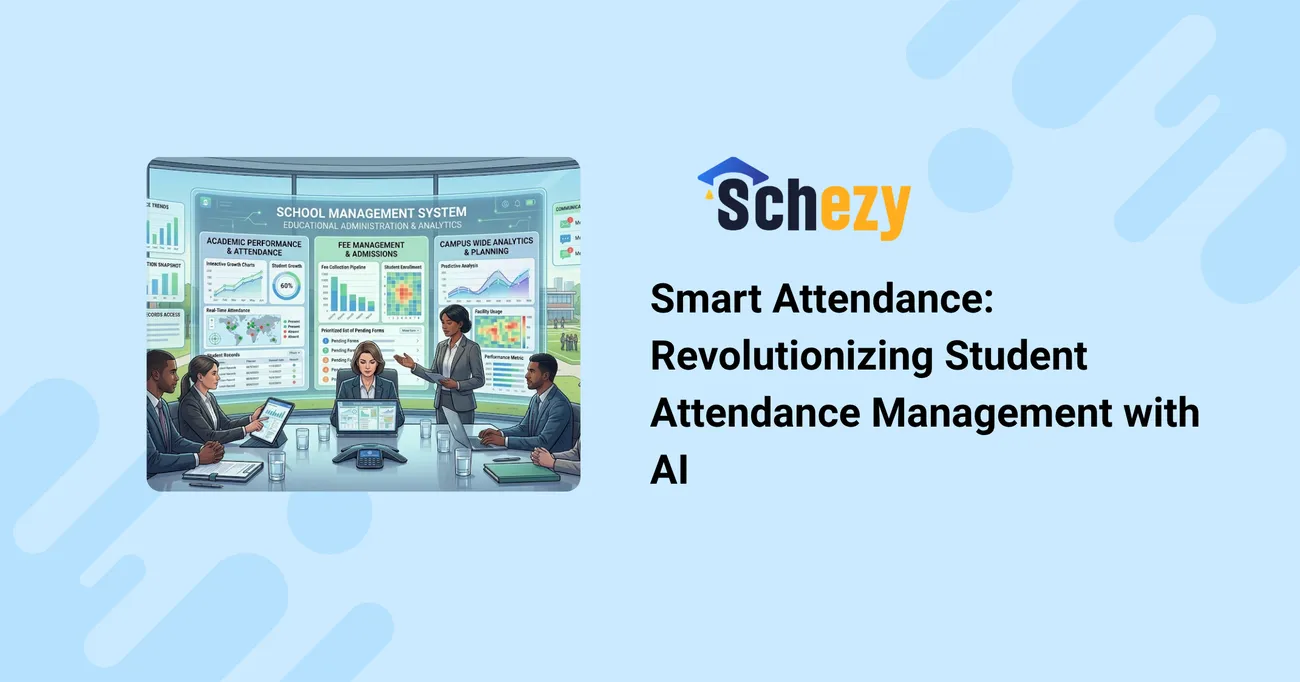
Smart Attendance: Revolutionizing Student Attendance Management with AI
Managing student attendance is an important responsibility for schools, colleges, and coaching institutes. However, traditional attendance methods often involve manual registers, consume valuable classroom time, and create challenges in maintaining accurate records.
With the advancement of education technology, institutions are adopting smart attendance solutions that automate attendance tracking, improve accuracy, and simplify student monitoring.
Using technologies such as artificial intelligence, facial recognition, QR verification, biometrics, and GPS tracking, modern attendance systems help educational institutions create a faster, secure, and efficient attendance process.
What Is a Smart Attendance System?
A smart attendance system is a technology-based solution that automatically records and manages student attendance using advanced technologies such as AI, facial recognition, QR codes, biometrics, and cloud-based platforms.
Unlike traditional attendance registers, these systems reduce manual work and provide real-time attendance information for teachers, administrators, students, and parents.
A smart attendance system helps institutions:
- Automatically record student attendance
- Verify student identity
- Reduce proxy attendance
- Generate accurate attendance reports
- Improve parent communication
By replacing manual processes with automation, educational institutions can manage attendance more efficiently and focus more on improving student outcomes.
Why Schools Choose Automated Attendance Systems
Managing attendance manually becomes difficult when schools and coaching institutes handle large numbers of students. Teachers often spend valuable teaching time marking attendance, maintaining records, and preparing reports.
An automated attendance system helps institutions simplify this process through digital tracking and real-time monitoring.
Saves Classroom Time
Teachers can complete attendance marking quickly and spend more time focusing on teaching and student interaction.
Improves Attendance Accuracy
Digital attendance records reduce manual errors and help institutions maintain organized student data.
Prevents Proxy Attendance
AI-based verification methods ensure attendance is recorded for the correct student, improving transparency.
Simplifies Attendance Reporting
Administrators can easily generate attendance reports, analyze patterns, and make informed decisions.
How Facial Recognition Attendance Works
A facial recognition attendance system uses artificial intelligence and computer vision technology to identify students and automatically record attendance.
The process includes:
Student Registration
Student information and facial data are securely registered in the attendance system.
Face Verification
When students enter a classroom or designated area, the system scans their faces and matches them with registered profiles.
Automatic Attendance Recording
After successful verification, attendance is automatically marked with the date and time.
Attendance Monitoring
Teachers and administrators can access attendance records and monitor student attendance trends.
This technology provides a secure verification process while reducing the need for manual attendance tracking.
Features of a Digital Attendance System
A digital attendance system provides advanced features that help educational institutions manage attendance effectively.
QR Code Attendance
QR-based attendance allows students to mark their presence by scanning a unique code.
Benefits include:
- Faster attendance marking
- Easy implementation
- Reduced paperwork
GPS-Based Attendance Tracking
GPS technology helps verify attendance locations and supports transportation monitoring, field activities, and remote learning environments.
Parent Notifications
Modern attendance platforms allow parents to receive updates about:
- Student attendance status
- Absence records
- Late arrivals
- Attendance trends
This improves transparency between institutions and families.
Attendance Analytics
Attendance data helps institutions identify patterns and provide timely support to students who may need additional guidance.
Benefits of a Student Attendance Management System
A student attendance management system helps schools, teachers, students, and parents manage attendance more effectively.
Benefits for Teachers
- Reduces administrative workload
- Saves classroom time
- Provides accurate attendance records
- Simplifies report generation
Benefits for Students
- Faster attendance process
- Easy access to attendance history
- Improved accountability
Benefits for Parents
- Real-time attendance updates
- Better visibility into student attendance
- Improved communication with institutions
Benefits for Institutions
- Reduced paperwork
- Improved operational efficiency
- Better attendance monitoring
- Data-driven decision making
Smart Attendance System vs Traditional Attendance
| Traditional Attendance | Smart Attendance System |
|---|---|
| Manual register entries | Automated digital records |
| More classroom time required | Faster attendance marking |
| Higher possibility of errors | Improved accuracy |
| Manual reporting process | Instant analytics |
| Proxy attendance risk | Identity verification |
How Schezy Helps Institutions Go Digital
Schezy helps educational institutions adopt AI-powered solutions that simplify academic operations, improve student management, and enhance communication.
By combining technology with education workflows, Schezy helps schools and coaching institutes improve:
Student Management
Institutions can gain better visibility into student activities, engagement, and learning progress.
Automated Workflows
Technology reduces repetitive administrative tasks, allowing educators to focus more on teaching.
Digital Learning Experiences
Schezy supports institutions in creating technology-driven learning environments that improve student engagement.
Better Communication
Digital solutions improve transparency between educators, students, and parents.
By integrating smart attendance technologies such as AI verification, digital tracking, and real-time updates, institutions can build a connected education management ecosystem.
Future of Attendance Management
The future of attendance management will be driven by artificial intelligence, automation, and real-time data analysis.
Future attendance systems will not only track student presence but also help institutions understand engagement patterns, identify challenges, and provide better academic support.
As education continues moving toward digital transformation, smart attendance solutions will become an important part of modern education management.
Frequently Asked Questions
What Is a Smart Attendance System?
A smart attendance system is a digital solution that automatically records student attendance using technologies such as AI, facial recognition, QR codes, biometrics, and cloud-based software.
How Does a Facial Recognition Attendance System Improve Accuracy?
A facial recognition attendance system verifies student identity before marking attendance, reducing errors and preventing proxy attendance.
What Are the Benefits of an Automated Attendance System?
An automated attendance system helps institutions save time, reduce manual errors, improve reporting, and maintain accurate attendance records.
Can Parents Receive Attendance Notifications?
Yes. Modern attendance platforms can provide real-time updates about student attendance status, absences, and late arrivals.
Is Smart Attendance Useful for Coaching Institutes?
Yes. Coaching institutes can use smart attendance solutions to manage large student groups, automate tracking, and improve communication.
Conclusion
Smart attendance technology is transforming how educational institutions manage daily attendance. By combining AI, facial recognition, QR verification, GPS tracking, and automation, schools and coaching institutes can create a more efficient and transparent attendance process.
As education continues adopting digital solutions, smart attendance systems will play an important role in improving student monitoring, institutional efficiency, and communication between educators, students, and families.
Explore more insights on AI, digital learning, and education technology trends on the Schezy Blog.